
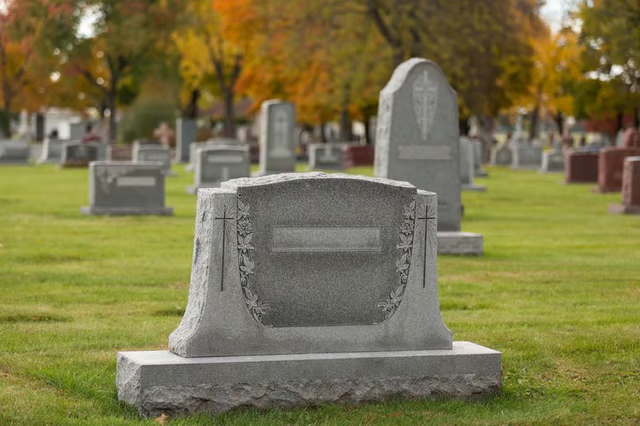
Grave robbery is the offense of removing a body or artifacts from a grave. The penalties can be civil or criminal, and state laws vary significantly. Grave robbery often becomes a political issue when archaeologists dig up artifacts from ancient people. Native American groups in the United States have fought to have their grave sites respected, and the law on this particular variety of grave robbery is often unclear.
Corpse Theft
Corpse theft is the act of removing a corpse from its grave. People may steal corpses for a variety of reasons, including youthful pranks, interest in dead bodies, necrophilia and scientific experimentation. Most states have laws against corpse theft and treat it as a felony or misdemeanor. It is also a civil offense. The family members of the deceased may sue under a variety of statutes, most frequently intentional infliction of emotional distress.
Grave Robbery
Grave robbery is the crime of removing valuables from a person's grave. Most states treat grave robbery as its own offense, although some states incorporate grave robbery into other robbery statutes. Texas, for example, defines felony theft as the act of stealing more than $1,500 worth of goods from a person, corpse or grave. The offense is punishable by time in jail. Family members of the deceased may also institute a civil action to recoup the value of the stolen property or to punish the perpetrator for committing a tort.
Archaeological Interests
Archaeologists frequently participate in digs to recover artifacts to learn about past societies. They have come under heavy fire for exhuming artifacts of certain peoples, particularly Native Americans in the United States. The Native American Graves Protection and Repatriation Act, a federal law passed in 1990, extends grave protection to Native Americans' ancestors. Agencies that receive federal funding, including educational institutions, must return cultural artifacts, graves and even bodies to the Native American tribes to whom they belong. Knowingly violating this law results in loss of federal funding, civil lawsuits and in rare cases, criminal charges.
Necrophilia Cases
Necrophilia, or the obsession with and sexual attraction to corpses, is perhaps the most disturbing reason people rob graves. Nine states in the United States do not have laws against necrophilia. This gained national media coverage in 2006 when three men attempted to have sex with a corpse they dug up in Wyoming. Although police wanted to charge them with third-degree sexual assault, there were no laws at the time prohibiting necrophilia. In states that do have laws against necrophilia, the crime is often viewed as a kind of sexual assault, punishable by time in prison.