


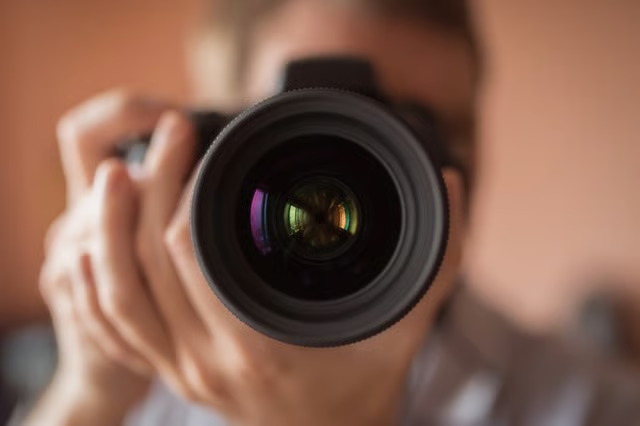
To snap or not to snap, that is the question. Celebrities and politicians love getting their pictures taken, at least when they are spiffed up and looking good, while ordinary people sometimes don't. If you are a camera buff, or even one of the millions of Americans who carry a smartphone with a camera built in, you may wonder: is it against the law to take pictures of people without their permission?
Taking Photos in Public
If you stand in a public place, you can usually take a photo of anything you can see. That means in a public park, on a public beach, on a city street or in an outdoor spectacle, like a marathon, you can shoot photos to your heart's content. Take snaps of trees and sidewalks, yes, but go ahead and snap shots of people, too. Be a little careful however if you are using a telephoto lens. Just because your feet are on public land doesn't mean that you can shoot into private property.
Honoring Expectations of Privacy
If a person has a reasonable expectation of privacy in a location, even if it's public, you cannot take photos there. This includes public bathrooms and sports club locker rooms. It certainly includes private homes, including backyards and pool patios. If you take shots in a place where someone has a reasonable expectation of privacy, you are violating his right to privacy, which can get you in trouble criminally and also trigger a civil lawsuit for damages.
Under the federal Video Voyeurism Prevention Act, it is a crime to take photos of a person's naked body parts without their permission. The Act makes it illegal to "...intentionally capture an image of a private area of an individual without their consent and knowingly do so under circumstances in which an individual has a reasonable expectation of privacy.”
Snapping Shots on Private Property
Under federal law, you can take photos only if the owner doesn't post restrictions. This includes restaurants, cafes and most businesses, including "businesses" technically belonging to society, like a city museum, a court house or a library. Look for signs or ask someone in charge. Locations like airports and train stations often have restrictions too, for security reasons.
Here's a good rule of thumb: if a private property is open to the public (like a grocery store), you can take photos unless the owner posts a sign saying you can't. If you assume you're allowed to take pictures and someone from the business tells you to stop, you'll need to stop.
Photographing Kids
You have the legal right to photograph children in public without their or their parents' consent, but this can be regarded as a suspicious activity by parents. However, the act of photography under these circumstances is not illegal. Generally it is perfectly legal for strangers to photograph a child, and post or publish the images as long as they are not published on a child pornography site. However, check the laws in your state as some states have passed restrictive legislation and more are considering doing so.