
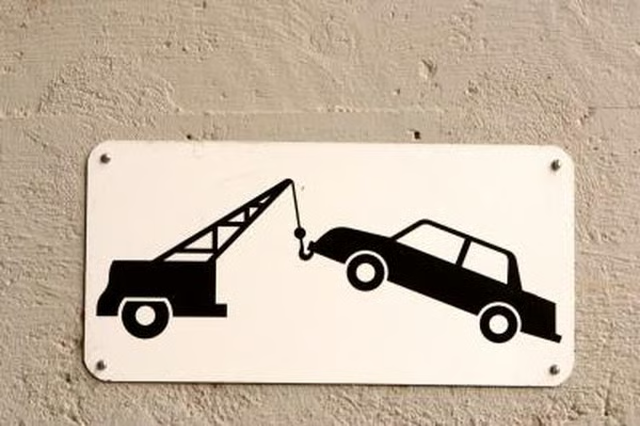
Banks pay repossession agencies to reclaim their vehicles when borrowers default on their loan obligations. When car buyers obtain vehicle loans to finance their purchases, they pledge their vehicles as collateral for their loans. During periods of weak economies, repossession is common. State laws determine what rights repossession agencies, borrowers and banks have upon default. In Ohio, the Ohio Uniform Commercial Code outlines the rights they have upon default.
Notice Laws
Banks do not have to provide notice prior to reclaiming their vehicles when borrowers default. However, within five days of repossession, they must provide written notification to buyers of their rights to offer "full tender." The notice requirement only applies to "Buy Here/Pay Here" dealerships and auto dealerships that financed the car and subsequently assigned its rights to a lending institution. These entities must provide borrowers with a written notice of default and notice to cure the default by offering full tender.
Substance of Notice
The written notice must contain the total amount a borrower must pay to remedy or cure his default. Banks that do not provide these written notices do not have a legal basis to repossess their vehicles and cannot sue defaulting parties for deficiency judgments. Banks must also provide written notice of the proposed sale date, location and minimum bid price. They must provide a written notice notifying car borrowers that banks may repossess their vehicles and sue them for any remaining deficiency after the sale.
Limitations and Remedies
However, borrowers who independently financed their vehicles have different notice rights. Banks of independently financed cars do not have to provide written notice to cure but must provide notice of the proposed sale. When banks do not provide this mandatory written notice, then buyers have rights against deficiency judgments and rights to $500 damage awards.
Right to Cure
After the bank sends their written notices, borrowers have 15 days to cure their deficiencies. Alternatively, if banks have already repossessed their vehicles, borrowers have 20 days to cure their deficiencies. They satisfy their deficiencies when they pay all installments due, including installments due under acceleration clauses. Lenders can accelerate all remaining loan obligations once borrowers default by using acceleration clauses. Borrowers must also pay any incidental fees including repossession fees unless those fees are less than $25. Borrowers must pay their deficiencies in cash or by purchasing bonds in two equal payments.
Mechanics of Repossession
When banks repossess vehicles, the repossession agency or banks do not usually have rights to sell personal property remaining in vehicles. However, they may sell any after-market improvements. Banks must also use reasonable care to prevent public removal of property or theft. Ohio repossession agencies cannot "breach public peace" by using physical force, damaging property or engaging in verbal threats.
Considerations
Since state laws can frequently change, do not use this information as a substitute for legal advice. Seek advice through an attorney licensed to practice law in your jurisdiction.