


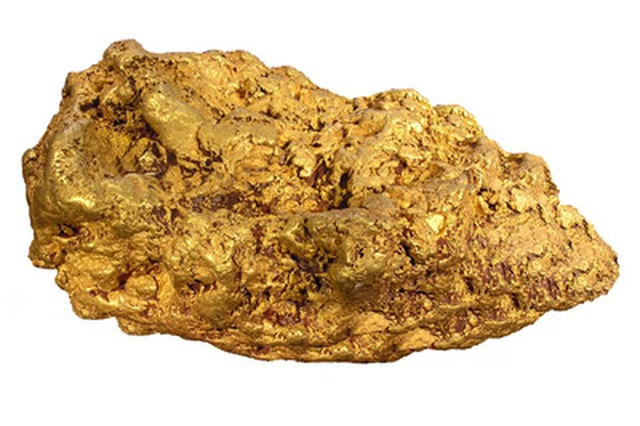
For gold to form, geological time must include a period when metamorphic rock is created. Sedimentary and igneous rocks become metamorphic rock through prolonged periods of intense heat and pressure; for example, volcanic magma flows provide both the heat from the molten lava and the weight from the mass as it cools. Kentucky’s geological history doesn’t lend itself to gold-forming because the surface and near-surface layers of earth are sedimentary. There may be gold deep down in ancient rock forms, but the cost of accessing it is prohibitive, and there is no data to indicate how much might exist.
Is There Gold in the Ohio River Valley?
Even though Kentucky native soil is not considered by geologists to be rich in gold, there is some indication that gold has washed down the Ohio River from metamorphic formations way up north that were dislodged by glaciers and carried south by glacial melt. If you own or are planning to purchase land along the river, especially for the purpose of prospecting, you will need the state to issue you a patent for your land.
Kentucky Land Patents
The state issues patents, or deeded right to land grants, to landowners. To receive a patent, a prospective owner has to receive permission from the governor’s office to survey the property, record his reservation of that area for survey, submit the survey for approval and receive a governor’s grant of approval. As of 2010, those patents must be reviewed during the title search process of a property purchase. Mineral rights on the property in question belong to the patent holder.
Read More: How to Get a Land Patent
Kentucky’s Land Autonomy
Whereas most states must sublimate their land and mineral rights to federal law, Kentucky is what is known as a state-land state, which allows the state government to determine any sales and use of land within the state. Anyone can apply for a Kentucky land patent, on private or state land. It does not matter if the land is already deeded to someone else and/or occupied. The system restricts patents to no more than 200 acres at a time. If your patent application is successful, you are issued a deed to the property, but at any time, someone else could file for a patent on all or part of your 200-acre block.
What Does This Mean to a Kentucky Gold Prospector?
The good news is that your patent for Ohio River Valley land—which may or may not have gold deposits—gives you absolute rights to the earth beneath the surveyed surface. Neither the state nor federal government can impose any mineral rights on that land that supersedes your patent rights. The bad news is that if you find gold, and the word gets out, some other individual or conglomerate will likely file for a patent and challenge yours.