
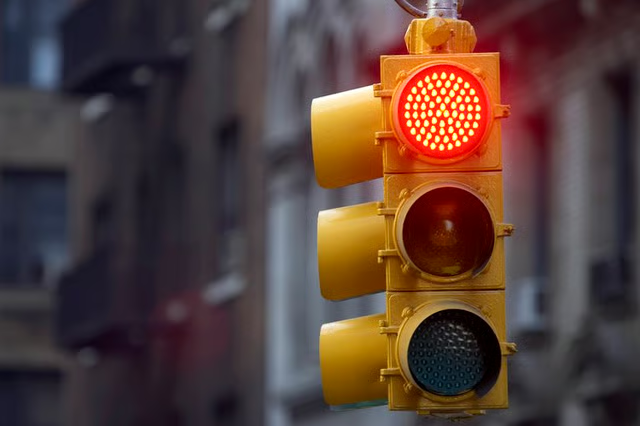
When you see a flashing red light as you approach an intersection, you must come to a complete stop. Not doing so can result in getting a traffic violation.
A flashing red light is similar to a solid red light in that respect. Because it flashes, however, you can drive through the intersection once the coast is clear, instead of waiting for the light to turn green. In that way, it is more like a stop sign than a stop light. Just be sure to stop completely and yield the right of way to others who arrived at the intersection before you.
A Red Traffic Light with Green Arrow
Some traffic signals have arrows indicating when you should make a left or right turn. When you see a green arrow, you can turn in the direction the arrow is pointing. The red light indicates that you need to be in the correct lane for the turn and have to yield the right-of-way to other cars and pedestrians in the intersection.
Read More: The Disadvantages of Traffic Lights
A Solid Red Arrow
When you come to an intersection with a solid red arrow, you are required to stop. You are not permitted to turn in the indicated direction until the arrow or signal turns green.
A Flashing Red Light at a Railroad Crossing
When you see a flashing red light at a railroad crossing, you must make a full and complete stop. You should proceed only once you are sure no train is coming.
At many railroad crossings, an automatic gate comes down when the flashing lights are triggered to prevent you from crossing the tracks and being hit by an oncoming train. The gate lifts when the train has passed, and it is safe to cross.
A Flashing Red Light at a Crosswalk
Flashing red lights also appear at crosswalks. When you see one, make a complete stop. Once you are sure no pedestrians are crossing, you can proceed.
The Benefits and Drawbacks of Traffic Signals
Traffic signals help provide control at intersections so that traffic continues to move in an orderly fashion. They help improve the safety and efficiency of both vehicle and pedestrian traffic. Despite their benefits, there are some drawbacks to traffic signals. They can increase certain types of accidents, most commonly rear-end collisions. Unjustified traffic signals can also result in excessive delays and drivers disobeying the lights.