
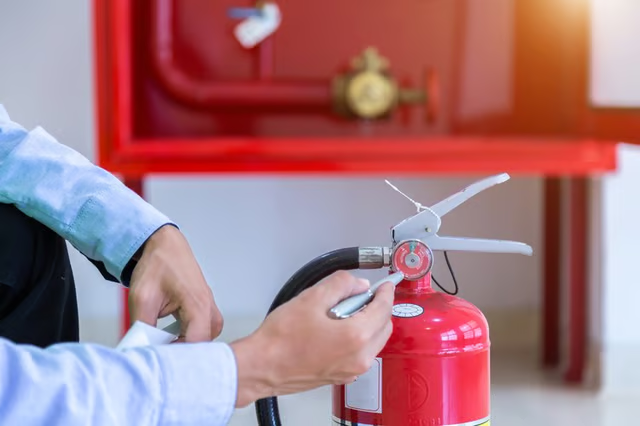
Fire extinguishers are a vital piece of safety equipment in any home, commercial building or vehicle. Because of this, the United States Department of Transportation (DOT) maintains specific DOT fire extinguisher requirements for the vehicles that travel U.S. roadways. When a vehicle collision occurs, and a fire starts or flammable materials in transit combust, a commercial truck fire extinguisher can mean the difference between quickly containing the fire and the fire growing out of control, potentially injuring or even killing victims.
Read More: OSHA Fire Extinguisher Regulations
Which Vehicles Need to Carry Fire Extinguishers?
Following DOT fire extinguisher requirements, all trucks, truck tractors and buses except for vehicles used in driveaway-towaway operations must be equipped with fire extinguishers. The specific safety rating a fire extinguisher must meet depends on the type of vehicle carrying it. There is no requirement for drivers to equip personal vehicles with fire extinguishers, though small, personal fire extinguishers are available for motorists to purchase to carry in their cars.
Commercial vehicles that transport hazardous materials are required to be placarded when doing so, and they must be equipped with fire extinguishers rated 10 B:C or greater. Vehicles that do not transport hazardous vehicles must carry either one fire extinguisher rated 5 B:C or greater or two fire extinguishers rated 4 B:C or greater.
Read More: Regulations on Fire Extinguishers on Construction Equipment
OSHA Requirements for Fire Extinguishers in Vehicles
The U.S. Occupational Health and Safety Administration (OSHA) maintains and enforces safety requirements for nearly all employers in the United States. This includes fire extinguisher requirements for all employers that rely on commercial transportation. OSHA requirements for fire extinguishers in vehicles include:
- Employers must mount, secure and identify fire extinguishers in an area conspicuous to employees.
- Use only OSHA-approved fire extinguishers.
- Employers must inspect, test and maintain fire extinguishers.
- Employer-provided fire extinguishers must be appropriately classified for the kinds of fires that could occur in each specific work environment.
OSHA-approved fire extinguishers meet specific safety ratings set by the Underwriters’ Laboratories, an independent safety testing and certification organization. The Underwriters’ Laboratories fire extinguisher ratings are based on two criteria: the type of fire the extinguisher is equipped to extinguish and the fire extinguisher’s size. The number in a fire extinguisher’s safety rating refers to the square feet of coverage it provides, and the letter or letters in its safety rating refer to the class of fires it is designed to extinguish:
- Class A fires are fires involving everyday flammable materials like wood, paper and textiles.
- Class B fires are fires involving flammable gases and liquids such as gasoline and oil.
- Class C fires are fires involving electronics and electrical equipment.
- Class D fires are fires involving combustible metals like titanium, sodium and magnesium.
Mounting and Securing Fire Extinguishers
DOT fire extinguisher requirements also specify how and where fire extinguishers must be mounted and secured within a vehicle. A commercial truck fire extinguisher must be filled and ready for use at all times. It must be securely mounted within the vehicle, so it does not roll, slide or become jostled with the vehicle’s movement.
Every fire extinguisher carried in a commercial vehicle must have its Underwriters’ Laboratories safety rating clearly marked on its exterior. Additionally, fire extinguishers must not use extinguishing agents that can possibly freeze, with or without chemical anti-freeze protection, and they must comply with the Environmental Protection Agency’s toxicity requirements for fire extinguishers.
Fire Extinguisher Maintenance
A commercial truck fire extinguisher should be inspected monthly and serviced annually. Additionally, it should be refilled and recharged after every use. OSHA requirements for fire extinguishers in vehicles and all other workplaces state that dry chemical fire extinguishers must be emptied and receive maintenance every six years. When fire extinguishers are removed from the workplace for recharging and refilling, employers must provide alternative means of extinguishing fires.
Read More: Fire Extinguisher Training Requirements